10.0.0.2 Admin Login: How to Access Router Settings & Pause Time
You are sitting on your bed, ready to play your favorite mobile game. But your internet starts acting up, or maybe you just need to pause your Piso WiFi time so you do not waste your precious coins. You grab your phone and look at the connection details, only to see the numbers 10.0.0.2 staring back at you.
Staring at a blank web browser can drive anyone crazy when you just want your connection to work. Dealing with router portals feels like reading an alien language. Today, I will walk you through the exact steps for the 10.0.0.2/admin login, how to pause your session time, and how to fix those annoying login errors fast. Let’s fix your network right now.
If you are adjusting the user access settings on your hotspot network to better manage bandwidth distribution, setting up the right configurations via the 10.0.0.0.1 Piso Wifi Pause Time portal gives you full authority over active connection sessions.
Understanding the 10.0.0.2 IP Address Identity
Let’s clear the confusion right away. What are these random numbers?
Think of the internet like a giant city. Every single house in a city needs a mailing address. If you do not have an address, the mail carrier cannot deliver your letters. The internet works the same way. Your router needs an address to send and receive data.
The numbers 10.0.0.2 make up a private IP address. It is the specific home address for your router or your local Wi-Fi portal.
Most normal home routers use numbers like 192.168.1.1. But some specific brands, like Edimax or certain Piso WiFi machines, use 10.0.0.2 instead. This number acts as a secret doorway. When you type it into your browser, it opens up the hidden control panel for your entire network.
Why Do Network Owners Use This Specific IP?
You are in total control when you access this doorway. You do not have to settle for the factory settings.
- Change your password: Boot off people who are stealing your internet.
- Rename your Wi-Fi: Change your network name to something fun.
- Manage your time: Perfect for coin-operated Wi-Fi machines.
If your hardware is running on a different subnet range than your secondary access points, you may need to access the 192.168.8.1 portal to change default wireless paths.
Step-by-Step Guide for the 10.0.0.2/admin Login Screen
Alright, let’s get you logged in. You do not need to be a computer genius to do this. You just need a device connected to the network.
Follow these exact steps to get inside the 10.0.0.2 admin panel.
Step 1: Secure a Local Network Connection First
This is the biggest mistake people make. You cannot open the door if you are not in the house!
- Turn on your phone, tablet, or laptop.
- Go to your Wi-Fi settings.
- Connect to the specific Wi-Fi network tied to the router or portal.
- If you are using mobile data (like 4G or 5G), turn it off right now. Mobile data will confuse your phone. It will try to search the public internet instead of talking to your local router.
Step 2: Launch a Clean Web Browser
You need an app to surf the web. Any standard browser works fine.
- Google Chrome
- Safari (on iPhones and Macs)
- Microsoft Edge
- Mozilla Firefox
Open a fresh, blank tab.
Step 3: Type the 10.0.0.2 Address Correctly
Look at the very top of your screen. You will see the address bar. This is where you type website names.
- Tap on the address bar.
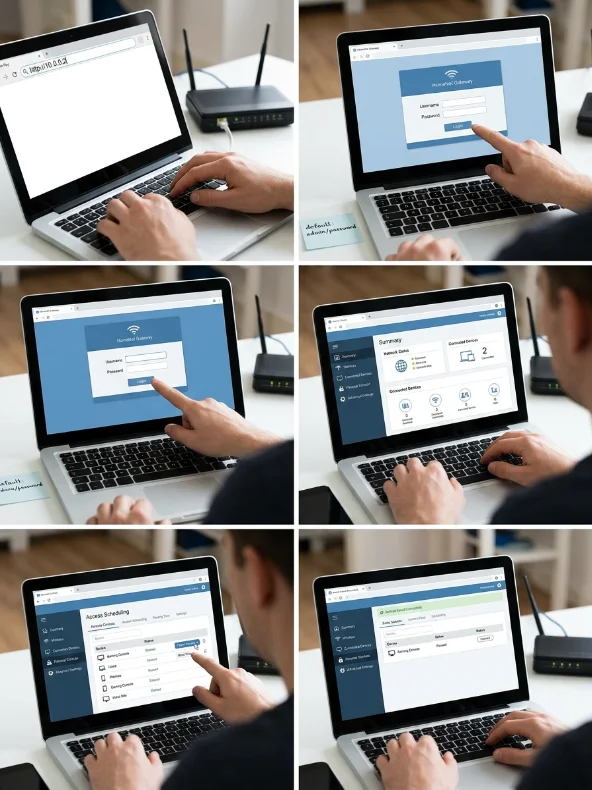
- Carefully type exactly this: 10.0.0.2/admin
- Hit the Go or Enter button on your keyboard.
Do not type it into the Google Search box in the middle of the screen. If you type it in the search box, Google will just show you a bunch of random articles. You need to type it in the top bar to actually connect to the machine.
Step 4: Enter Your Router Admin Credentials
If you typed it correctly, a login screen will pop up. It will ask you for a username and a password.
Where do you find these?
- Check the physical sticker: Flip your router upside down. There is usually a sticker that lists the default admin username and password.
- Try the factory defaults: If there is no sticker, try the most common factory defaults. Usually, the username is “admin” and the password is “admin”. Sometimes the password is just left completely blank.
- Accessing Piso WiFi portals: If you are logging into a coin machine, the portal might just ask for your voucher code or coin amount instead of an admin password.
When assigning permanent addresses to your local network expanders, verifying the configuration through the 10.0.0.10 dashboard ensures your connected nodes remain fully accessible.
Activating the 10.0.0.2 Pause Time Feature to Save Data
If you live in the Philippines, or if you use a local coin-operated Wi-Fi hotspot, you probably hear about this feature all the time.
Piso WiFi is amazing. You drop a coin in the machine, and you get internet access for a specific amount of time. But what happens if you need to go to the store? Or what if your mom calls you for dinner? You do not want your precious internet time to tick away while you are not using it.
That is exactly why the 10.0.0.2 pause time trick is so important.
How to Instantly Pause Your Wi-Fi Time
Stopping the clock is super easy. Just follow these steps to save your remaining minutes.
- Open your browser while you are connected to the Piso WiFi.
- Type 10.0.0.2 into the top address bar and press Enter.
- The main portal screen will load. You will see your active session and your remaining time counting down.
- Look for a big button that says “Pause Time” or simply “Pause”.
- Tap it.
Boom. The clock stops. Your remaining time is saved and frozen. You can close your phone and go do whatever you need to do.
How to Resume Your Saved Internet Time
Ready to surf the web again? Getting back online is just as fast.
- Connect back to the same Wi-Fi network.
- Open your browser and type the IP address again.
- When the portal loads, the button will now say “Resume Time” or “Play”.
- Tap it. The clock starts ticking, and your internet connection opens back up.
This simple trick saves people so much money. Always remember to hit pause when you put your phone in your pocket!
For networks utilizing fiber modems or advanced client hubs, logging directly into the 192.168.18.1 gateway allows you to assign unique static IPs across your local machines.
Fixing Common www.10.0.0.2 Typing Mistakes
Computers are super picky. They do not understand what you “meant” to type. They only read exactly what you actually pressed on your keyboard.
If you make one tiny typo, the whole login process fails. Let’s look at the biggest mistakes people make when trying to reach the portal.
The Accidental Period Mistake
You finish typing the numbers. You hit the period key by accident before hitting Enter. You type 10.0.0.2. With an extra dot at the very end.
Your browser gets totally confused. It thinks you made a mistake. It will probably show an error saying “Site cannot be reached.” Always double-check your typing. There should never be a period at the end of the address.
The Dangerous "WWW" Trap
This is a huge one. We are so used to typing “www” before everything. We type www.google.com or www.facebook.com.
But an IP address is not a regular website! It is a direct number to a local machine.
Never type www.10.0.0.2 into your address bar. If you do this, your browser will try to look for a real public website with that name. That website does not exist. You will just get a broken page. Just type the numbers. Nothing else.
Mixing Up Keyboard Letters and Numbers
Sometimes, our eyes play tricks on us.
- Do not type the letter “O” instead of the number “0”.
- It is ten, dot, zero, dot, zero, dot, two.
- If you type 10.O.O.2, it will fail instantly.
To segment your administrative traffic away from general users on your machine networks, you can establish routing rules via the 10.10.10.1 control panel.
Troubleshooting 10.0.0.2 Admin Portal Access Errors
Okay. You typed everything perfectly. You did not use mobile data. But the screen still will not load. Or it rejects your password.
Do not panic. Here are the best ways to fix stubborn login problems.
1. Restart Your Hardware Devices
It sounds silly, but it fixes 90% of all tech problems.
- Unplug your router from the wall.
- Wait for exactly 30 seconds.
- Plug it back in.
- Wait a few minutes for the lights to turn solid green or blue.
- Restart your phone.
- Try the login process again.
2. Check if the IP Address Automatically Changed
Sometimes, routers get confused and change their own address. You might be trying 10.0.0.2, but the router actually changed itself to 10.0.0.1 or 192.168.0.1.
Here is how to check your real router IP on a phone:
- On iPhone: Go to Settings. Tap Wi-Fi. Tap the blue “i” circle next to your connected network. Scroll down. Look for the word “router.” The numbers next to it are your true IP address.
- On Android: Go to Settings. Tap Connections or Network. Tap Wi-Fi. Tap the gear icon next to your network. Tap Advanced or View More. Look for “gateway” or “router.” That is your number.
If the number says something different, type that new number into your browser instead!
Certain custom firmware builds use distinct address spaces to prevent security breaches, making the 20.0.0.1 admin login step crucial for administrative adjustments.
3. Execute a Complete Factory Reset
Did you completely forget your custom password? Or did you buy the router used from a friend who forgot to tell you the password?
You need to wipe the slate clean. You need to do a factory reset. This will erase all settings and put the router back to the day it was built.
- Leave the router plugged in and turned on.
- Look at the back of the router. Find a tiny, hidden hole labeled “Reset.”
- Get a paperclip or a needle.
- Push the paperclip inside the hole and hold the hidden button down.
- Keep holding it for 10 to 15 seconds.
- Watch the lights on the front. They will all flash at the same time and then turn off.
- Release the button.
The router will take a few minutes to reboot. Once it turns back on, the password will be reset to the original default printed on the bottom sticker. You are back in control!
If you are configuring a business-class local area network structure, accessing the default 10.1.1.1 dashboard helps clear up device IP conflicts instantly.
Securing Your Wi-Fi Inside the 10.0.0.2 Dashboard
Once you are successfully inside the 10.0.0.2 admin dashboard, a whole new world opens up. You have the power to customize everything.
But with great power comes great responsibility. You should change a few settings immediately to protect your home.
Change the Default Admin Password First
Leaving your router with the default “admin” password is super dangerous. Anyone who connects to your Wi-Fi can type the IP address, guess the password, and lock you out of your own network.
- Look for a menu called “Administration,” “System Tools”, or “Security.”
- Find the “Change Router Password” option.
- Create a strong, unique password. Write it down on a piece of paper and tape it to the bottom of the router so you never forget it.
Secure Your Custom Wi-Fi Network Name (SSID)
Your SSID is the name of your Wi-Fi that pops up on people’s phones.
- Go to the “Wireless” or “WLAN” settings.
- Change the Network Name (SSID) to something you easily recognize.
- Never use your full real name or your home address. Keep it private.
Kick Off Network Freeloaders
Is your internet running incredibly slow? Your neighbor might be stealing your connection to download massive movie files.
- Find the “Attached Devices” or “DHCP Clients” list in the admin panel.
- This screen shows every single phone, smart TV, and laptop currently using your internet.
- If you see a device you do not recognize, you can block it right from that screen.
- To permanently fix the problem, go to your wireless security settings and change your main Wi-Fi password. Your neighbor will instantly get kicked off and will not be able to reconnect!
Vending machine operators who want to offer custom intervals can compare alternate gateway methods by exploring the 10.5.50.1 wifi pause time setup to adjust session limits seamlessly.
FAQs
Can I access the 10.0.0.2 portal without an internet connection?
Yes! You do not need active, working internet to load the 10.0.0.2 page. You just need a local connection to the router itself. Even if your internet cable is totally unplugged from the wall, you can still connect your phone to the Wi-Fi signal and open the admin page.
Why does the login page say "Not Secure"?
When you type the IP address, your browser might flash a red warning saying the connection is not secure. Do not panic. This is totally normal. Browsers expect a specific security certificate (HTTPS) for public websites. Since you are logging into a local machine inside your own house, it does not have that public certificate. It is perfectly safe to click “Advanced” and proceed to the login page.
What exactly is a default gateway?
A default gateway is just the technical term for your router’s IP address. It is the door that all your internet traffic passes through to get from your house to the outside world. For your network, the default gateway is 10.0.0.2.
Can two different routers use the same IP address?
Yes, but not on the same network at the same time. Millions of routers around the world use 10.0.0.2 as their private address. It only matters locally. But if you try to plug two routers into each other in the same room, and they both use the same number, they will fight. It will crash your internet.
Conclusion
Dealing with internet problems can absolutely make you want to pull your hair out. But now, you hold the actual keys to the castle. You know exactly what those numbers mean and how typing 10.0.0.2/admin opens the secret doorway to your personal network settings. You even know how to hit that 10.0.0.2 pause time button to save your Piso WiFi minutes like a total pro.
The very next time your connection drops or a sneaky neighbor tries to steal your Wi-Fi, you do not have to wait for a tech guy. You can just pull out your phone, log straight into your 10.0.0.2 admin dashboard, and fix the whole thing yourself in two minutes flat. You are the boss of your network now. Go enjoy your fast, safe, and perfectly paused internet!