192.168.1.254 Admin Login
You must have come across the IP address 192.168.1.254 when you tried to configure your WiFi network, change your SSID, tighten your online security, or for other reasons. This is a personalized address that is usually accessed by popular networking brands, such as Linksys, Alcatel, AboCom, OvisLink, MSI, LoopComm, and CC&C, to provide users with access to the administrative configuration of their routers.
This guide will provide information on what 192.168.1.254 is, how to log in successfully, troubleshooting, and the differences between the address and similar-sounding ones.
When not working? Try –
How to log in to 192.168.1.254?
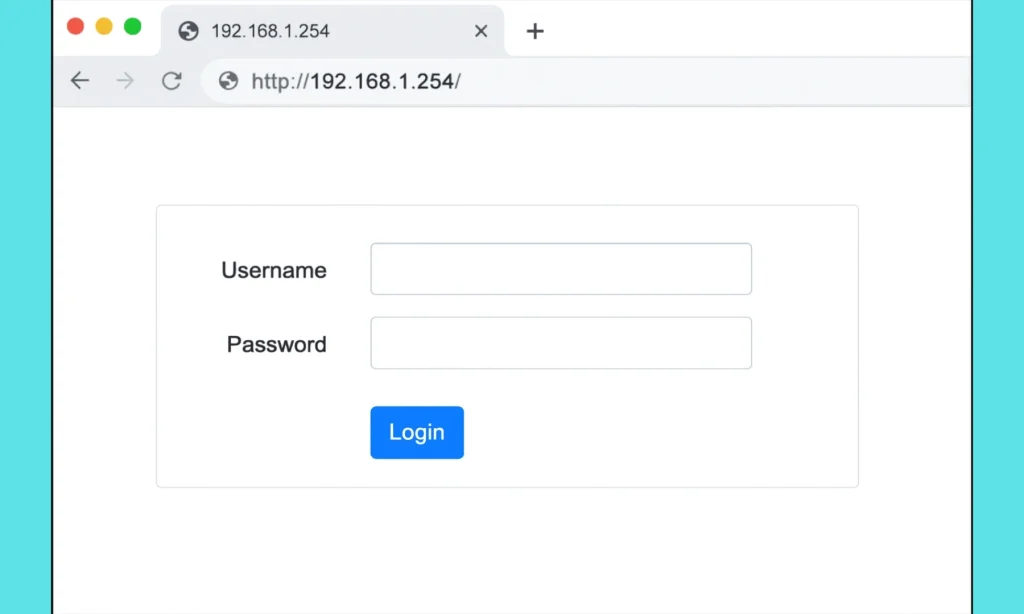
If the default router IP is 192.168.1.254, you can easily log in to the Admin Panel on your router when connected and make the necessary changes. The login process is quite simple; you can follow these steps to access your Admin Panel.
- Open the Internet browser that you have (Firefox, Chrome, or Mozilla).
- Enter 192.168.1.254 or 192.168.254.254 in the URL bar and press Enter.
- You will be presented with a login page where you will be required to enter your username and password. Type in the default user name and password.
- You are now in your router’s Admin panel.
Check your session limit on the 10.0.0.0.1 piso wifi portal login.
Hint: An IP address should consist of only numbers; typing 192.168.l.254 will give one an empty webpage since it does not exist.
Common Incorrect IP Address Formats
Many users accidentally mistype the router’s IP address, leading to login errors. Here are examples of incorrect formats you should avoid:
- 192.168 1.254 254 – spaces are used instead of dots.
- 192 168.254 254 – missing dots between the number groups.
An IP address must always contain four numerical sections separated by dots, such as 192.168.1.254. This IP is a secondary choice for the PLDT router login.
Differences between 192.168.1.254 Vs. 192.168 l 254
The significant difference is where the “1” is used in the first; the second uses “i” instead. IP addresses are only made up of numbers; using the alphabet cannot make sense.
Things You Need to Know about 192.168.1.254 IP Address
All devices that can connect to the internet are assigned an IP address, a unique digital number that identifies the online services used to transmit data. Imagine it as a virtual street address or phone number that lets your device communicate with the rest of the internet.
However, most people do not know that their router also has its own IP address. For high-end fiber modems, refer to 192.168.100.1.
Why 192.168.1.254 Matters
A few router manufacturers have 192.168.1.254 as a default private IP address of the router.
Linksys and Alcatel-branded routers usually assign this address to their users.
You are likely to log in to your router with the same IP whenever you change your WiFi settings, such as the name of your network, the security key, or the parental controls.
Home Network Private IP Addresses.
The router is located at a central point in a home or office network and controls all devices connected to it. To ensure this is achievable, some IP address blocks are reserved for private use, i.e., they are never allocated to the public internet. These ranges include:
192.168.0.0 – 192.168.255.255
172.16.0.0 – 172.31.255.255
10.0.0.0 – 10.255.255.255
192.168.1.254 does not work outside your local network because it falls within this range. It is not accessible outside the network via the internet.
How the Numbers Work
An average IPv4 address consists of four sets of numbers, separated by dots. The building disintegrates as follows:
The network is recognized in the first three sections.
The last part finds out the actual equipment in that network.
Example:
In 192.168.1.254 →
192.168.1 = Network ID
254 = Device ID
If there is more than one device on the same router, they all share the same Network ID but have different Device IDs. Your router automatically assigns these via DHCP (Dynamic Host Configuration Protocol).
Public vs. Private: The Routing of Public vs. Private.
All devices on your network have a personal IP address, but when accessing the internet, they share a single public IP address. A router does the translation of the two based on a system called NAT (Network Address Translation).
It reverse-proxies outgoing requests (to private IPs) to a single public IP.
It maps received data to the correct private IP to reach the appropriate device.
This arrangement will keep your home network secure, and internal devices will not be exposed directly to the external world.
Is 192.168.1.254 Accessible Online?
No, it is not, as it is a private IP; it is not accessible outside your local network. Nonetheless, any machine on your network can communicate with the router and other connected machines without any problems.
Default logins, User Name, and Passwords for IP 192.168.1.254
User Name | Passwords | Usage Percentage % |
admin | admin | 48 |
‘randomly generated” | admin | 12 |
admin | – | 8 |
– | admin | 6 |
admin | airlive | 5 |
Default User Name and Passwords Used by Different Router Brands
Brands | User Name | Password |
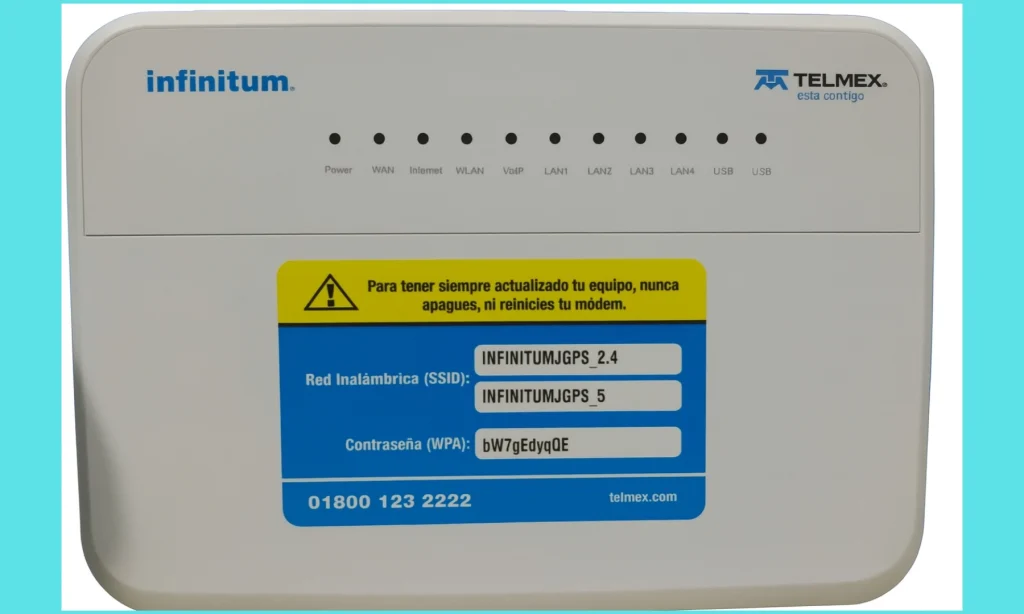
Telmex Infinitum | TELMEX | Contraseña (WPA) printed on the modem box |
Nokia (Subisu) | AdminGPON | ALC#FGU |
Nokia (Worldlink) | userAdmin | Printed on a label on the back of the router |
AT&T | [blank] | attadmin |
Fastweb | (Printed on modem) | (Printed on modem) |
Telus | admin | (Admin Password printed on modem) |
Spark NZ | admin | admin |
Maxis | administrator | (Router’s Serial No. printed on the back of your router) |
Plusnet | adminContraseña (WPA) printed on the modem box | The admin password for the Hub Manager is printed on the back of the router. |
Forgot your username or password?
If you can’t remember your router’s login information, don’t worry. Most manufacturers post the default username and password on a sticker on the router’s back or underneath. You can also refer to the user manual or other literature that came with the device.
If you previously changed the login information for 192.168.1.254 and can’t remember it now, the only option is to reset the router to factory defaults. This will remove any custom setups, including your customized credentials.
To reset the router, press and hold the RESET button (typically a tiny pinhole) for around 10 seconds. The reset is complete when the front lights begin to flash, and the device reboots with default settings.
Can't access the router's web interface?
If the admin page fails to load, one of the following solutions usually works:
Check the IP address.
Mistyping the IP address is widespread; for example, inputting 192.168 l 254 (with the letter “l”) and adding https:// or www will prevent the page from loading. Enter http://192.168.1.254 precisely as shown.
Restart the router and modem.
Power cycle both devices by unplugging them, waiting 3-5 minutes, then plugging them back in. Retry after they reset.
Temporarily turn off your firewall.
Antivirus or firewall settings can occasionally prevent access to local network pages. Turn them off briefly to test access.
Try a different default gateway.
Some ISPs utilize alternative router IP addresses, such as 192.168.0.1 or 192.168.1.1.
If you’re unsure, you can easily find your router’s gateway address in your device’s network settings.
Update your browser.
Outdated browsers might cause compatibility concerns. Use the latest versions of Chrome, Firefox, or Safari.
Clear the browser cache and cookies.
The admin panel may not load properly if old cached data is present.
How To Clear Cache:
- Chrome: Settings → More Tools → Clear Browsing Data. Select All Time → Clear Data.
- To clear cookies and site data in Firefox, go to the menu and select Privacy & security.
- Safari: Menu → Preferences → Privacy → Manage Website Data → Delete All
Changing the WiFi Network Name (SSID)
After connecting to 192.168.1.254, you can edit your WiFi network’s name:
| WiFi network’s | Process |
| Wireless > Wireless Settings → Add new SSID → Save | |
Netgear | Other brands (Linksys, Alcatel, Cisco, MSI) follow a similar procedure; simply look under Wireless or WiFi Settings. |
D-Link | Go to Settings → Wireless. Enter your new WiFi Name (SSID). Make changes. |
Configuring Your Router With 192.168.1.254
Once in the admin panel, you may begin customizing your network settings. If something goes wrong, you may always restore the default settings by doing a factory reset.
1. Change the router's username and password.
Go to the General Settings area and update your login information. This protects the router from illegal access.
2. Change the router's local IP address.
To change your gateway from 192.168.1.254, go to Setup and then Network Settings.
Enter the new IP address and save.
Remember that once you’ve changed your address, you must use the new one to access the admin page.
3. Customize your WiFi network name (SSID).
Navigate to: Setup → Wireless Settings.
Enter your selected network name and create a strong password.
Setting Up a New Router With 192.168.1.254
If this is your first time configuring a router:
- Connect your ISP cable straight to a computer to confirm that your internet is working.
- Turn on the router and wait for the LEDs to stabilize.
- Connect the router to your modem via Ethernet or DSL.
- To begin personalizing your settings, open your browser and navigate to 192.168.1.254.
Following these procedures results in a seamless and error-free installation.
Troubleshooting 192.168.1.254 Login Problems
Having problems with your router control at 192.168.1.254? Your login is not working, or the page is not loading. The following is a simplified checklist to get everything working again.
1. Confirm Your Connections
The first thing you need to do is ensure your device is correctly connected to the router.
- Use a stable WiFi connection or an Ethernet cable.
- These loose connections or switching networks during the next login may block access.
2. Double-Check the IP Address
Big trouble ensues because of small typing mistakes.
- IPs, not letters, use only numbers; e.g., typing 192.168.l.254 (with an L) is a common mistake.
- In case 192.168.1.254 is not loaded, the default IP of your router could be some other default IP, like:
3. Check the credentials of the Logins
In case the panel loads but refuses to take your username/password:
- Search the default administrator username and password on the back of the router or in the manual (depending on brand; e.g., Telmex has theirs on the router).
- If you have previously changed the password but have forgotten it, you will need to reset it.
4. Reboot Network Devices
- Glitches in local networks are frequently resolved by rebooting.
- Unplug the router and modem.
- Wait about 2 minutes.
- Reboot them, then try again once they’re all up and running.
5. Switch off Firewall/security Software Temporarily.
Other firewalls block the use of local admin IPs.
- Switch the firewall off just to test the connection.
- Switch it off and back on as soon as possible.
6. Final Resort: Factory Reset.
In case of nothing being able to work – wrong credentials, no connection, no access to the admin page, etc., a reset gets all things into default.
- Hold the RESET button on the router for 10-15 seconds (use a toothpick or a pin).
The router will restart and be in its default settings, with the default login password.
What You Should Know GDPR and Privacy
As a private, internal IP address, 192.168.1.254 is not considered personally identifiable information under GDPR.
However, any data processed through your router may include personal information, such as:
- MAC Addresses
- Device IDs
- browsing metadata
- DHCP Logs
- Connection timestamps.
Key GDPR Considerations:
- Keep your login credentials confidential. Default passwords leave routers susceptible.
- Firmware updates are released regularly, and manufacturers address security vulnerabilities.
- Secure your WiFi using WPA2 or WPA3 encryption.
- Avoid sharing administrative access since unauthorized individuals can compromise data.
- Understand router logs: They may contain GDPR-protected data.
FAQs
What is 192.168.1.254?
It’s a common default private IP address used by many routers. The first three number groups represent the network ID, and the last group identifies the specific device within that network.
How do I log in to 192.168.1.254?
Type 192.168.1.254 into your browser’s address bar, enter your username and password, then click Login.
What are the most common default login details for 192.168.1.254?
The usual defaults are:
Username: admin
Password: admin
What is the default username for 192.168.1.254?
The most common default username is admin.
What is the default password for 192.168.1.254?
The most common default password is admin.
How do I access my router using 192.168.1.254?
Enter 192.168.1.254 into your browser, type in your login details, and click Login.
Default credentials are usually:
Username: admin
Password: admin
How do I open or use 192.168.1.254?
Just type 192.168.1.254 in the browser’s address bar, enter your username and password, and press Login.
Conclusion
Mastering how to use 192.168.1.254 makes managing your home network far easier. From updating WiFi settings to fixing login issues and securing your router, this private IP is the key to controlling your device’s configuration. With proper credentials, accurate IP entry, and basic troubleshooting, you can customize your network and keep it safe. Understanding these essentials ensures a smoother and more secure online experience for everyone connected.