192.168.18.1 - Login Admin
You need to change the router’s settings. Use the 192.168.18.1 IP Address. It is a Huawei network setup web page. It is here that you will know all about 192.168.18.1.
This will give you total command of the privacy and performance of your networks! It does not matter whether you are an IT professional or a small business owner.
If 192.168.18.1 doesn’t open your router dashboard, make sure you’re using the correct gateway address. You can also check our detailed 1.0.0.0.1 Admin Login guide to see if your router is configured with a different default IP.
What is 192.168.18.1? And Common Purpose
The definition of private IP is given by IANA within the range 192.168.0.0 to 192.168.0.16.
These IPs are used in households, offices,, and LANs and cannot be routed on the Internet at large.
Purpose: It is used as a default gateway, a port between the external net and the private net.
Why 192.168.18.1 And Not 192.168.1.1 or 192.168.0.1?
The default brands, such as TP-Link, D-Link, and Netgear, use IP router addresses such as 192.168.0.1 or 192.168.1.1. Minor brands, on the other hand, use 192.168.18.1, run customized firmware such as OpenWrt or DD-WRT, and are supplied with routers by the ISP.
Some ISP-provided routers use the 192.168.1.254 admin access page as their default gateway.
Step-by-Step Guide to 192.168.18.1 login
To change, configure, and set up router settings using 192.168.18.1, a user is expected to do the following:
Step 1: Test Network Connection
- This is regardless of the device you are using to connect, PC, laptop, iPhone, or tablet; just be sure you are all connected to the same router.
- Connect to the internet by using Wi-Fi or an Ethernet cable.
Step 2: Open the Bowser
- First, open the browser you prefer, e.g., Edge, Safari, Chrome, or Firefox.
- Type http://192.168.18.1/ in the Address bar.
- A login menu will be displayed (user name and password).
- Enter Epuser and userEp as the username and password, respectively.
- Press login
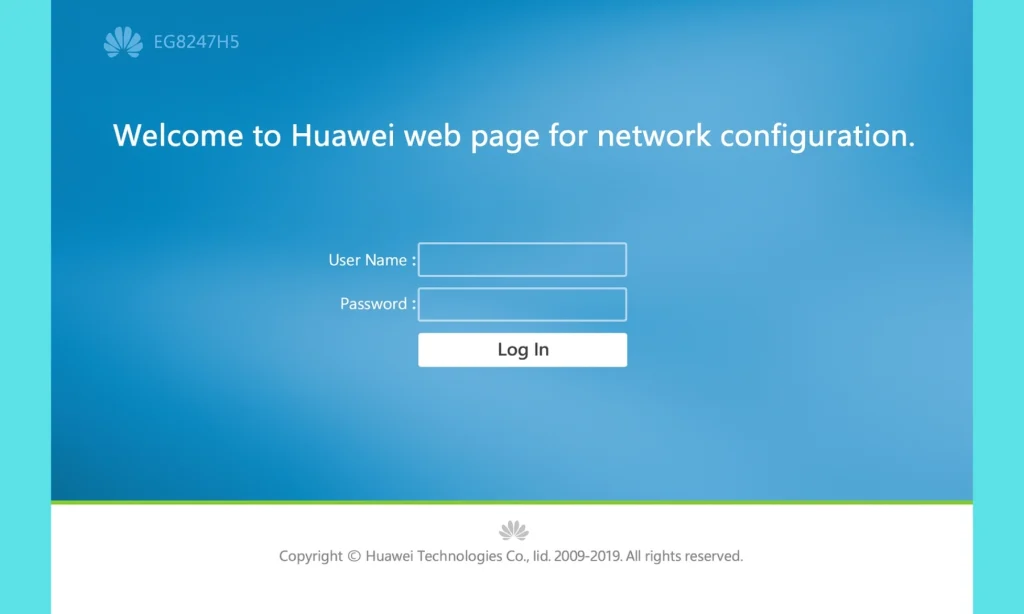
Step 3: Admin Panel
- After pressing the login
- The Huawei web interface will be accessed directly.
Other Popular 192.168.18.1 Default Username and Password
User Name | Passwords | Usage Percentage % |
matrix | random 8-digit display on the LCD | 50 |
random 8-digit display on the LCD | matrix | 50 |
admin | admin | – |
admin | password | – |
admin | – | – |
Note: Unless any of the combinations work, then examine the label on the router at the bottom.
Appearance of the Router Dashboard Post-Login
Upon a successful login to 192.168.18.1, your router’s administrator dashboard will appear. It is here that you can control anything on your home or work network.
Although the layout varies depending on the manufacturer, most dashboards have a similar layout:
a. Status / Overview
The following is a summary of your router’s status. It shows the type of internet connection you have, the WAN and LAN IP addresses, the devices connected to it, the installed firmware, and the total system uptime. It is a place to test the network to determine whether it is functioning normally.
b. Network Settings
In this case, you can customize your local network. The LAN IP address can be changed; the DHCP range can be altered; some devices can be configured to use a static IP address; and the DNS servers the network uses are configurable. These settings control the foundation of your home office network.In customized network setups, you may need to access the 10.0.0.10 router admin address.
c. Wireless Settings (Wi-Fi)
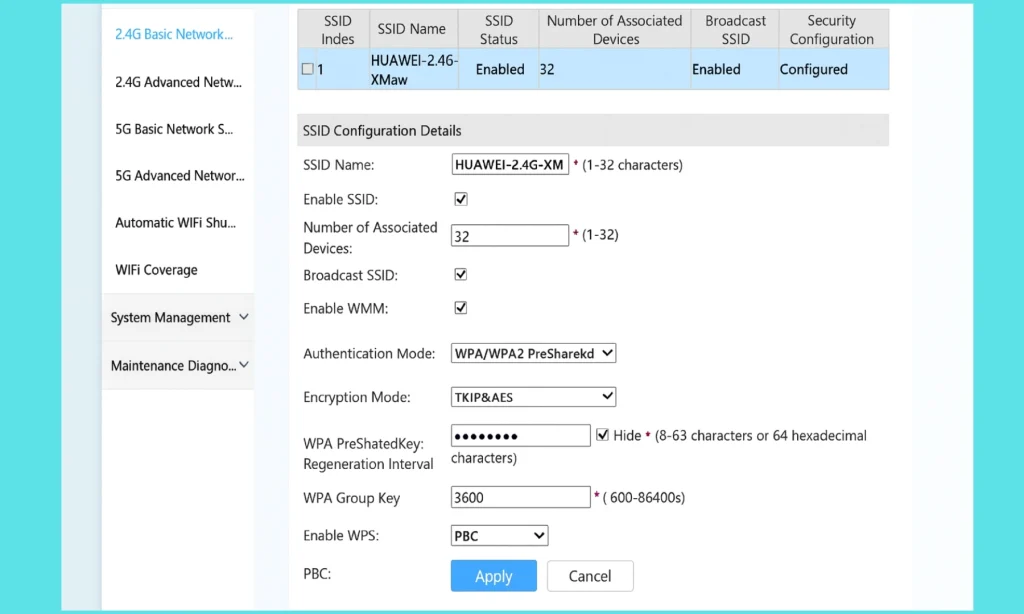
This is where all that is controlled for Wi-Fi settings. One can modify the name of your Wi-Fi network (SSID), Wi-Fi password, and security standard, which can be WPA2 or WPA3, to enhance security. It can also be adjusted in the channels, 2.4 GHz or 5 GHz switching, and can use a guest network on demand.
d. security & Firewall
This section is dedicated to the network security of your network. It is also possible to turn the firewall on or off, block specific IP or MAC addresses, and enable parental controls to promote safer surfing. It also allows you to restrict admins’ access to trusted devices.
e. Port Forwarding / NAT / DMZ
This segment is required whenever it is an online game, for CCTV, or when devices need to be used remotely. It allows you to forward specific ports and create a DMZ, which can be used to make specific devices visible to the outside world and to administer NAT policies to facilitate easier connectivity. These devices can be used to provide external applications with access to your internal network.
f. System Administration
This part will enable you to tweak the router’s administrative settings. These include changing the administrator and their login details, firmware upgrades, and creating or recovering the configuration files. It also has features such as rebooting and a complete reset of the router, and, under specific models, one can set up automatic restart.
You can also check out our guide on Piso WiFi pause time to improve network management and user control.
How to Change the Default Router Password
1. Open the router settings.
Log in to your router and visit the Administration or Management section. The default credentials are publicly available, so it is important to change them to ensure security.
2. Find the password settings.
Find the one named “Password,” “Access Control,” or something similar.
3. Type in your existing credentials.
Type the current password to ensure that the router authenticates you.
4. Create a new secure password.
Type in a new password which contains letters, numbers, and special characters – such as: H0meNet!2025.
5. Save the changes.
Use or save the settings to change your password as an administrator.
How to Change your Wi-Fi Name (SSID) and Wi-Fi Password.
1. Log in to your router.
Browse to 192.168.18.1, after which you can sign in to the router dashboard.
2. Go to Wireless Settings.
Go to the Wireless/ Wi-Fi Settings.
3. Set your new Wi-Fi name (SSID).
Enter the name you want it displayed as in the SSID field, e.g., MacPherson_WiFi.
4. Choose a type of encryption used for security.
Select WPA2-PSK or WPA3-Personal to have a strong level of wireless security.
5. Design a powerful password with Wi-Fi.
Set up a new safe password, like StaySecure!2025.
6. Save or apply the changes.
Click Save or Apply to change your Wi-Fi settings.
7. Reconnect your devices
Your equipment will go dead as the router will reboot the wireless service. Be sure to reconnect with your new Wi-Fi name and password.
How to Reboot Your 192.168.18.1 Huawei Router (When You Are Locked Out).
If you are unable to access the router at 192.168.18.1, or if you have forgotten your router password, a factory reset is usually the only way out.
Physical Reset Steps
- Find the reset button
Find a power reset button on the back of the router.
- Press and hold the button
Make sure the router is on, then press and hold the reset button with a pin or paperclip for 10-30 seconds.
- Wait for the reboot
Set the button free when the router’s flashing or automatic restart occurs.
After the Reset
- All settings return to default.
Wi-Fi name, password, LAN IP, and custom settings will all be reverted to factory defaults.
- Use the default user name and password.
Go back into the router and enter 192.168.18.1 again, using the default username and password.
Troubleshooting Access to 192.168.18.1
When you cannot access the login page of your router or the browser keeps going dead, the problem may be related to the connection, IP setup, or settings on your device. The problem can be diagnosed and remedied using the following steps.
1. Check Your Connection
Ensure that your device is well-connected to the router via Wi-Fi or Ethernet.
This can be tested by attempting to open another local IP, say 192.168.18.100. If the page does not load, it may be that your device is not connected to the network.
If 192.168.18.1 doesn’t open your router settings, your device may be using the 10.10.10.1 admin login page instead.
2. Check the appropriate Gateway Address.
It is possible that your router is not even using 192.168.18.1 as a gateway.
On Windows:
- Press Win + R, type: cmd and press Enter.
- Type ipconfig
- Search Default Gateway – it is the actual IP of your router.
On macOS / Linux:
- Open Terminal
- Type: netstat -nr | grep default
or
- ip route | grep default
- If the outcome is 192.168.0.1, 192.168.1.1, or any other address, use that.
3. Check the spelling of the IP Address.
Make sure that you enter the IP into your browser:
http://192.168.18.1
One of the most frequent errors is the typing of such letters as I in place of 1 (192.168.l8.1) or o in place of 0, which will not give access.
4. Clear Your Browser Cache
It sometimes loads a cached version of the login page, which prevents it from loading.
Clear browser history or open the page in Incognito / Private Mode.
5. Disable VPN or Proxy
Some proxy services and VPNs can disrupt local IP routing.
Switch off your VPN or proxy and attempt to connect to the router again.
6. Test a Wired Ethernet Connection.
In case the Wi-Fi is weak or improperly configured, you should always have a LAN cable that will connect your device directly to the router.
This usually offers better access to the admin page.
7. Check Firewall Settings
Your antivirus or firewall software might be preventing local connections to your device.
Turn it off, then reload and see if you can access the router.
8. Restart the Router
Temporary routing problems can be resolved with a simpler reboot.
- Power off the router
- Wait 30 seconds
- Turn it back on
This re-establishes the connection without losing your settings.
9. Wrong Username or Password
If the login page is displayed but your credentials are not working, an administrator may have changed them.
Contact a technician or reset in this case.
10. Invalidate a Factory Reset (Last Resort)
When none of the above solutions work, it might require a full router restore.
The reset will put the device into factory defaults, and you will need to log in again with the default credentials.
How To Determine the IP Address of Your Router.
Most routers use the address 192.168.18.1, though it is not necessarily the one your router uses. If this address does not work, you can search for your router model online to identify the correct default IP. Another way to find Router login details is on the label at the bottom or back of your router, where the login details are usually printed.
Should you wish to locate the IP address on your computer, the following steps apply to each operating system.
Locating your IP Address on Windows.
- Click the network icon.
In the lower right-hand corner of your screen, you will find the Wi-Fi or network symbol.
- Open your connected network
Choose the Wi-Fi network that you are connected to.
- View network details
There will be a panel with the information about your connection.
Find the IPv4 Address that appears as 192.168.18.1; this is the IP address of your router.
Locating Your IP Address on the Mac OS.
- Open the Apple menu
Click the Apple logo in the upper left corner of your screen.
- Go to System Preferences
Choose System Preferences (or System Settings in the newer versions of macOS).
- Open your Wi-Fi settings.
Select the Wi-Fi network with which you are presently connected.
- Locate the router address.
Search the field with the label Router – the value indicated there is your IP address of the router.
FAQs
What is the function of 192.168.18.1?
It’s your router’s control center! The private IP that lets you access settings like WiFi, security, and network management.
How can I gain access to the Huawei web interface?
Just connect to your WiFi → open a browser → type http://192.168.18.1 → enter your username and password. Boom, you’re in.
How can I modify the Huawei WiFi Password and SSID?
Log in → go to Wireless Settings → update your WiFi name (SSID) and password → hit Apply.
If I forget my login credentials, what should I do?
Try the default login first. If that fails, perform a factory reset by holding the reset button for 10–30 seconds, then log in with defaults again.
Am I able to configure both the 2.4G and 5G networks?
Yes, Huawei routers let you tweak 2.4 GHz and 5 GHz individually, including speed, channel, SSID, and password.
What’s considered a ‘strong’ WiFi password?
A password that mixes uppercase, lowercase, numbers, and symbols! Something like:
StaySecure!2025
Avoid names, birthdays, or anything guessable.